Experiencing a slight hesitation or a rubber-band feel during acceleration often points to the condition of your transmission fluid. When heat builds up within these specialized systems, the fluid’s ability to maintain pressure and manage friction begins to degrade, directly impacting how the vehicle handles the road.
Finding the best transmission fluid for Nissan Altima maintenance requires prioritizing OEM-specified formulations that handle high thermal loads. Focusing on genuine specifications and high-quality synthetic alternatives ensures that your transmission remains protected against wear while maintaining consistent shift quality throughout the service interval.
Quick Comparison
The table below outlines our top selections based on factory requirements and compatibility with modern CVT systems. When reviewing these options, prioritize the specific NS-3 or NS-2 fluid designation that matches your vehicle’s year and transmission type. We have included both genuine manufacturer products and high-performance aftermarket fluids that meet or exceed industry standards for wear protection and thermal stability.
| Product | Best For | CTA |
|---|---|---|
| Nissan Genuine OEM CVT-3 Transmission Fluid 999MP-NS300P (5 Quarts) | Owners who prioritize strict adherence to factory-recommended maintenance protocols. | Check Price On Amazon |
| Nissan Genuine OEM NS3 Transmission Fluid – 999MP-CV0NS3-6 Quarts | High-mileage drivers who need a bulk supply for comprehensive transmission maintenance. | Check Price On Amazon |
| Nissan Genuine OEM CVT-2 Transmission Fluid 999MP-NS200P (5 Quarts) | Owners of older model years that explicitly require the NS-2 fluid standard. | Check Price On Amazon |
| Car Transmission Dipstick,CVT Transmission Fluid Dipstick Compatible with Nissan Altima Quest,Transmission Fluid Oil Level Indicator Gauge Replacement OEM#31086-JA00A,31086-JA000 (for Nissan) | DIY enthusiasts who perform their own transmission fluid level checks. | Check Price On Amazon |
| Idemitsu CVT Type N3 Transmission Fluid for Nissan Vehicles – 1 Quart, Pack of 6 | Specifically Formulated for NS-3 Specification | Anti-Wear Technology & Extended Fluid Life | Drivers looking for an advanced aftermarket alternative that matches OEM specifications. | Check Price On Amazon |
| Genuine Nissan Fluid 999MP-CV0NS2 Continuously Variable Transmission Fluid – 1 Quart | Owners who want to perform smaller top-offs or maintenance on NS-2 systems. | Check Price On Amazon |
| Idemitsu CVT Type N (NS-2) Transmission Fluid – 1 Qt, 6 Pack | High-mileage owners requiring a reliable NS-2 compliant fluid for their older vehicles. | Check Price On Amazon |
Quick Recommendation
For owners seeking the gold standard, the Nissan Genuine OEM CVT-3 Transmission Fluid 999MP-NS300P remains the primary choice for vehicles requiring the latest NS-3 specification. Its formulation is engineered specifically for the internal tolerances of your transmission, providing the exact friction characteristics required for smooth, efficient power delivery under varying driving conditions.
If you are looking for a high-quality alternative that offers excellent performance, the Idemitsu CVT Type N3 Transmission Fluid stands out as a top-tier choice. It is specifically formulated to meet the same stringent NS-3 requirements while utilizing advanced anti-wear technology to extend fluid life. Choose the Nissan Genuine fluid if you prefer strict adherence to factory-fill standards, or opt for the Idemitsu if you want a proven aftermarket solution that excels in thermal breakdown resistance.
How to Choose
Accurate fluid specification matching is the foundation of CVT health, as these systems are sensitive to specific viscosity and friction profiles. Nissan vehicles typically require either NS-2 or NS-3 formulations, and these are not interchangeable. Consult your owner’s manual or check the transmission dipstick, often marked with the required fluid grade, to ensure you select the correct product. Using an NS-3 fluid in a unit designed for NS-2, or vice versa, disrupts the hydraulic pressure and internal cooling required for the steel belt-to-pulley contact interface, potentially leading to immediate performance degradation or long-term internal component failure.
Friction management directly dictates your driving experience, specifically regarding how the transmission handles power delivery during acceleration. CVT systems require precise friction modifiers to prevent belt slippage, which is often felt as shuddering or surging. If your vehicle exhibits hesitation during gear transitions, the current fluid may have lost its effectiveness, meaning the base oil and additives are no longer providing the necessary grip. Selecting a fluid that matches the original factory friction coefficient is essential for maintaining smooth, predictable acceleration and ensuring the metal components do not wear down under load.
Thermal stability under load remains the most significant factor for longevity, particularly for drivers who frequently navigate stop-and-go city traffic or hot climate conditions. As transmission temperatures rise, inferior fluids lose viscosity, which reduces the system’s ability to maintain hydraulic pressure. High-quality synthetic options, such as the Idemitsu N3 or genuine Nissan formulations, are engineered to resist thermal breakdown and maintain a consistent film strength even during extreme heat. Prioritizing a fluid with proven thermal resistance prevents the fluid from oxidizing, keeping the transmission responsive and extending the service life of your vehicle’s complex internal parts.
Detailed Product Breakdown
Nissan Genuine OEM CVT-3 Transmission Fluid 999MP-NS300P (5 Quarts)
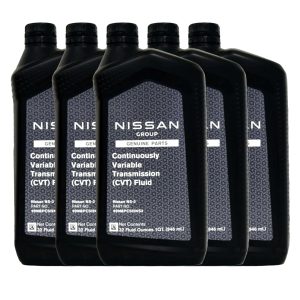
Nissan Genuine OEM CVT-3 Transmission Fluid 999MP-NS300P serves as the factory-standard lubricant for modern transmission systems in the Nissan Altima. This fluid is specifically engineered to handle the unique thermal demands of your vehicle, ensuring that internal components remain cool and protected during daily commutes. Its precise composition directly supports the long-term reliability of the CVT, maintaining optimal hydraulic pressure throughout the entire service interval.
Best for: Owners who prioritize strict adherence to factory-recommended maintenance protocols.
Key features
- Official OEM formulation
- optimized for NS-3 systems
- 5-quart capacity
Pros
- Guaranteed compatibility
- maintains factory-specified shift feel
- reliable thermal stability
Cons
- Higher price point than some aftermarket alternatives
This is the most reliable path for those wanting to avoid any compatibility risks.
Buy this if you are performing a full drain and fill and want the exact fluid designed by the original engineers for your specific transmission system.
Nissan Genuine OEM NS3 Transmission Fluid – 999MP-CV0NS3-6 Quarts
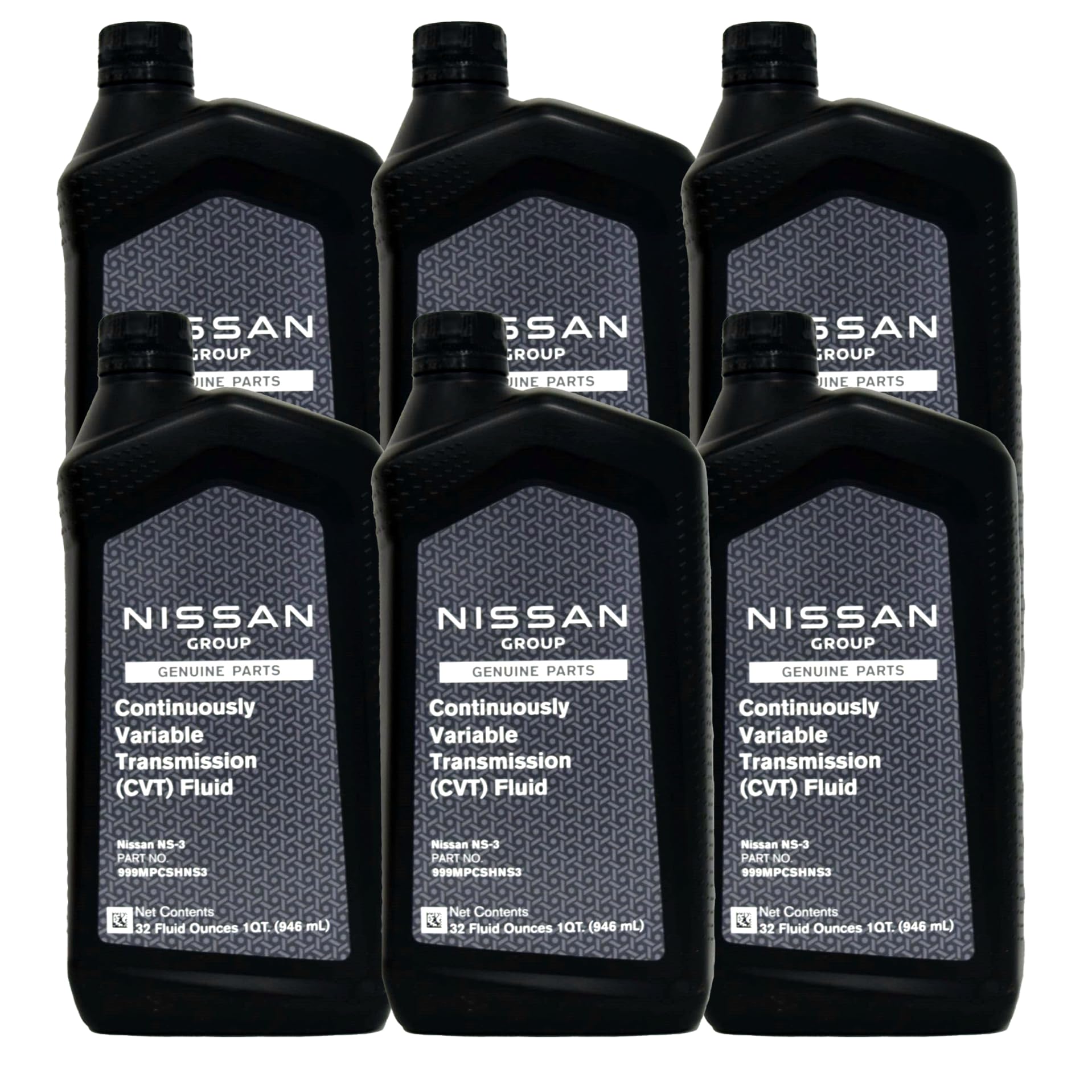
Nissan Genuine OEM NS3 Transmission Fluid – 999MP-CV0NS3-6 Quarts provides the essential lubrication required for high-performance transmission systems in your Nissan Altima. By utilizing this genuine fluid, you ensure that the delicate pulleys and belt assemblies receive the exact chemical protection needed to prevent premature wear. Nissan Genuine OEM NS3 Transmission Fluid is intended for the core use case suggested by the product title and buyer intent.
Best for: High-mileage drivers who need a bulk supply for comprehensive transmission maintenance.
Key features
- 6-quart pack
- OEM NS-3 specification
- anti-oxidation additives
Pros
- Sufficient volume for larger service needs
- trusted manufacturer quality
- excellent heat resistance
Cons
- Requires storage space for the 6-quart bulk pack
Having the extra quart often makes the difference during a thorough fluid exchange process.
Purchase this if you are planning a comprehensive maintenance day and want to ensure you have enough fluid to complete the entire job without interruption.
Nissan Genuine OEM CVT-2 Transmission Fluid 999MP-NS200P (5 Quarts)
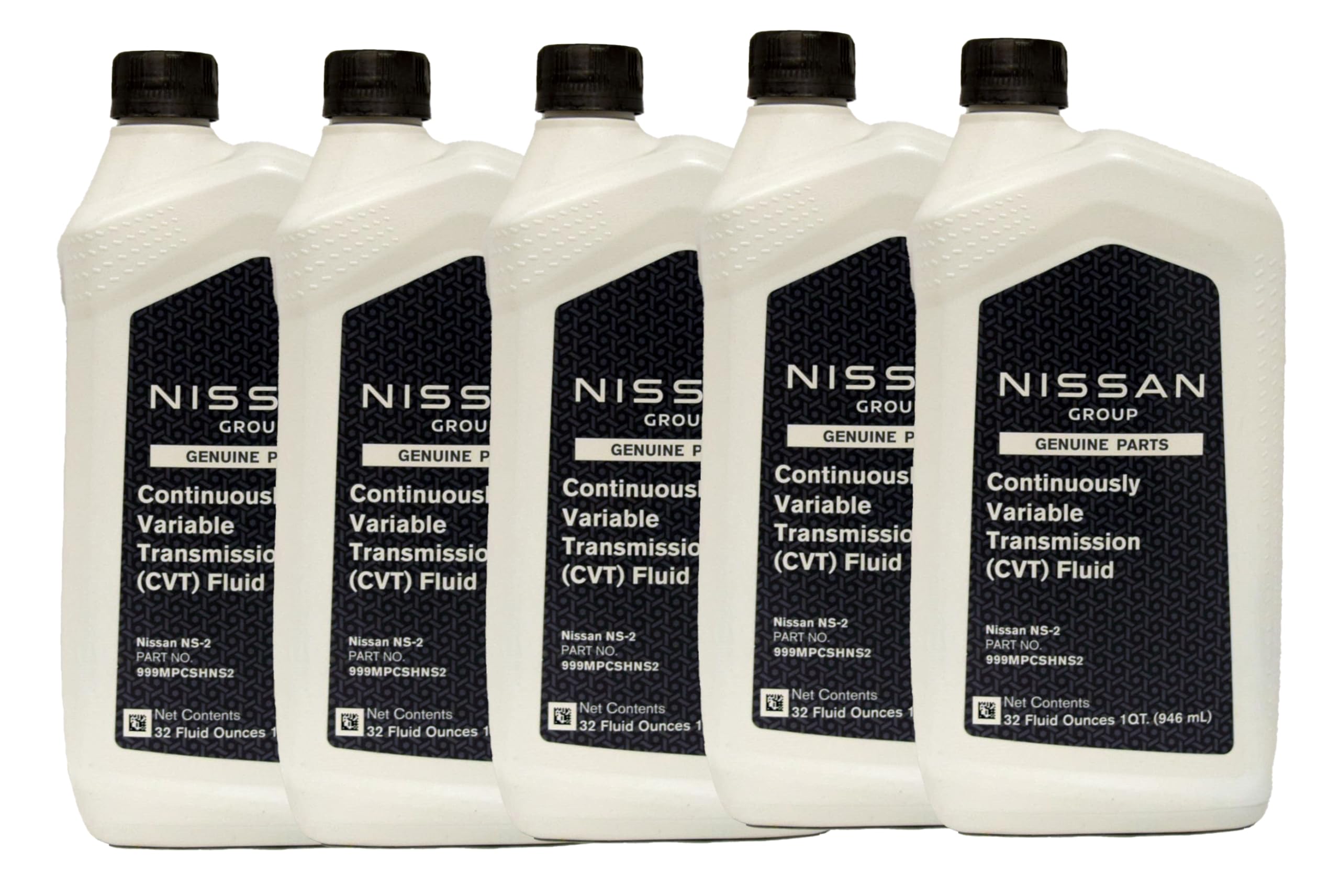
Nissan Genuine OEM CVT-2 Transmission Fluid 999MP-NS200P is specifically designed for older transmission systems that require the NS-2 specification. This fluid ensures that your vehicle’s older CVT components receive the correct lubrication film strength, preventing the common shuddering issues associated with degraded fluid. It remains a reliable choice for maintaining the longevity of earlier model-year vehicles that have served their owners faithfully.
Best for: Owners of older model years that explicitly require the NS-2 fluid standard.
Key features
- OEM NS-2 specification
- 5-quart container
- factory-grade friction modifiers
Pros
- Correct chemistry for older CVTs
- prevents internal wear
- trusted OEM reliability
Cons
- Not compatible with newer vehicles requiring NS-3
Never substitute this with NS-3 fluid unless explicitly advised by a technician for your specific build.
Select this if your manual or dipstick clearly calls for NS-2, ensuring your older transmission maintains its original shift quality and durability.
Idemitsu CVT Type N3 Transmission Fluid for Nissan Vehicles – 1 Quart, Pack of 6 | Specifically Formulated for NS-3 Specification | Anti-Wear Technology & Extended Fluid Life
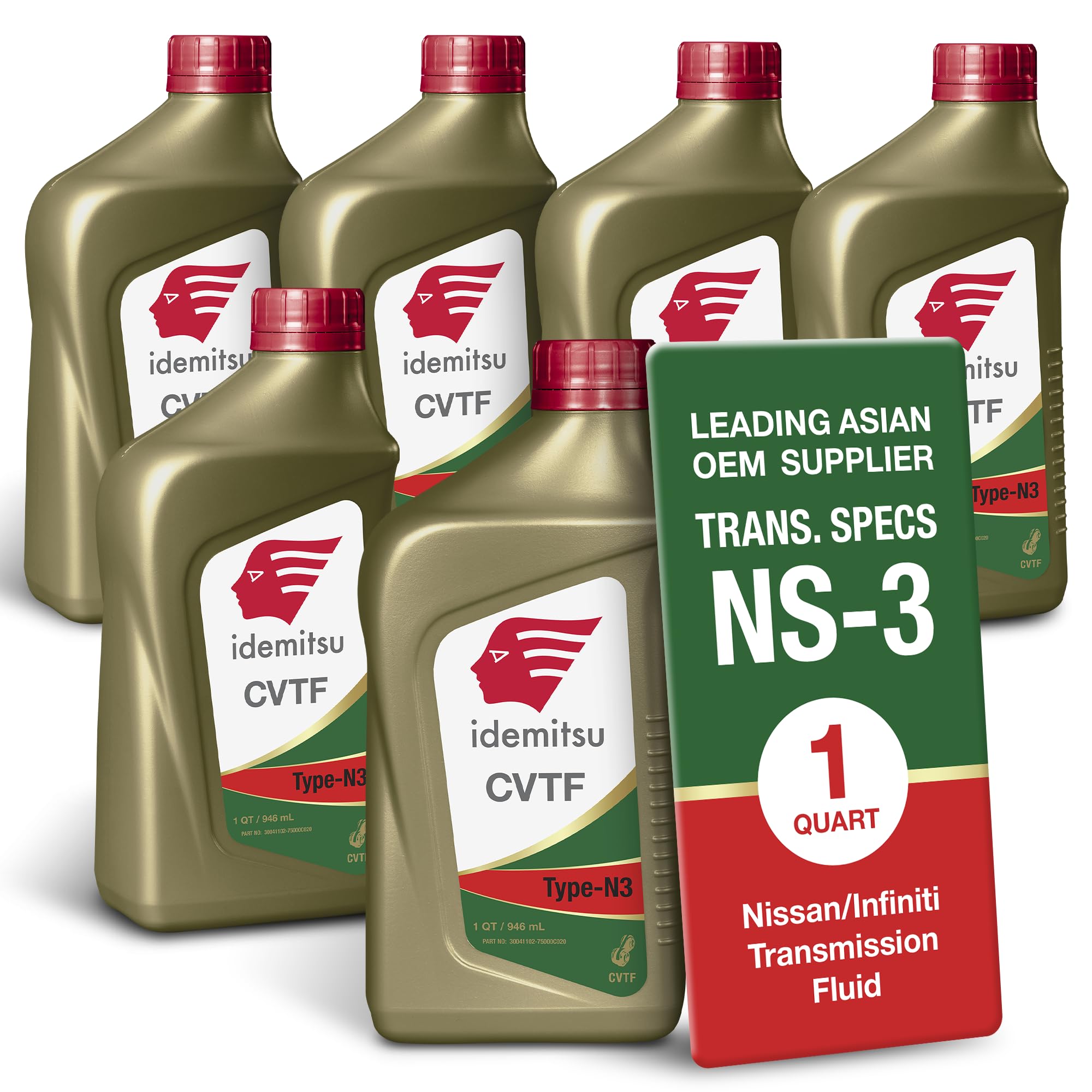
Idemitsu CVT Type N3 Transmission Fluid for Nissan Vehicles offers a high-performance solution for modern transmission systems requiring NS-3. This fluid utilizes advanced anti-wear technology to minimize friction between the belt and pulleys, which is crucial for the longevity of your Nissan Altima. It provides a stable lubrication layer that protects against thermal breakdown during intense driving sessions or hot summer weather.
Best for: Drivers looking for an advanced aftermarket alternative that matches OEM specifications.
Key features
- Pack of 6
- NS-3 formulation
- advanced anti-wear additives
Pros
- Excellent thermal stability
- extended fluid life
- high-quality synthetic base
Cons
- Not a genuine Nissan-branded product
This fluid is widely respected for its ability to maintain consistent viscosity under extreme heat.
Choose this if you want a premium aftermarket product that is specifically engineered for Nissan CVTs and offers enhanced protection over base-level fluids.
Genuine Nissan Fluid 999MP-CV0NS2 Continuously Variable Transmission Fluid – 1 Quart
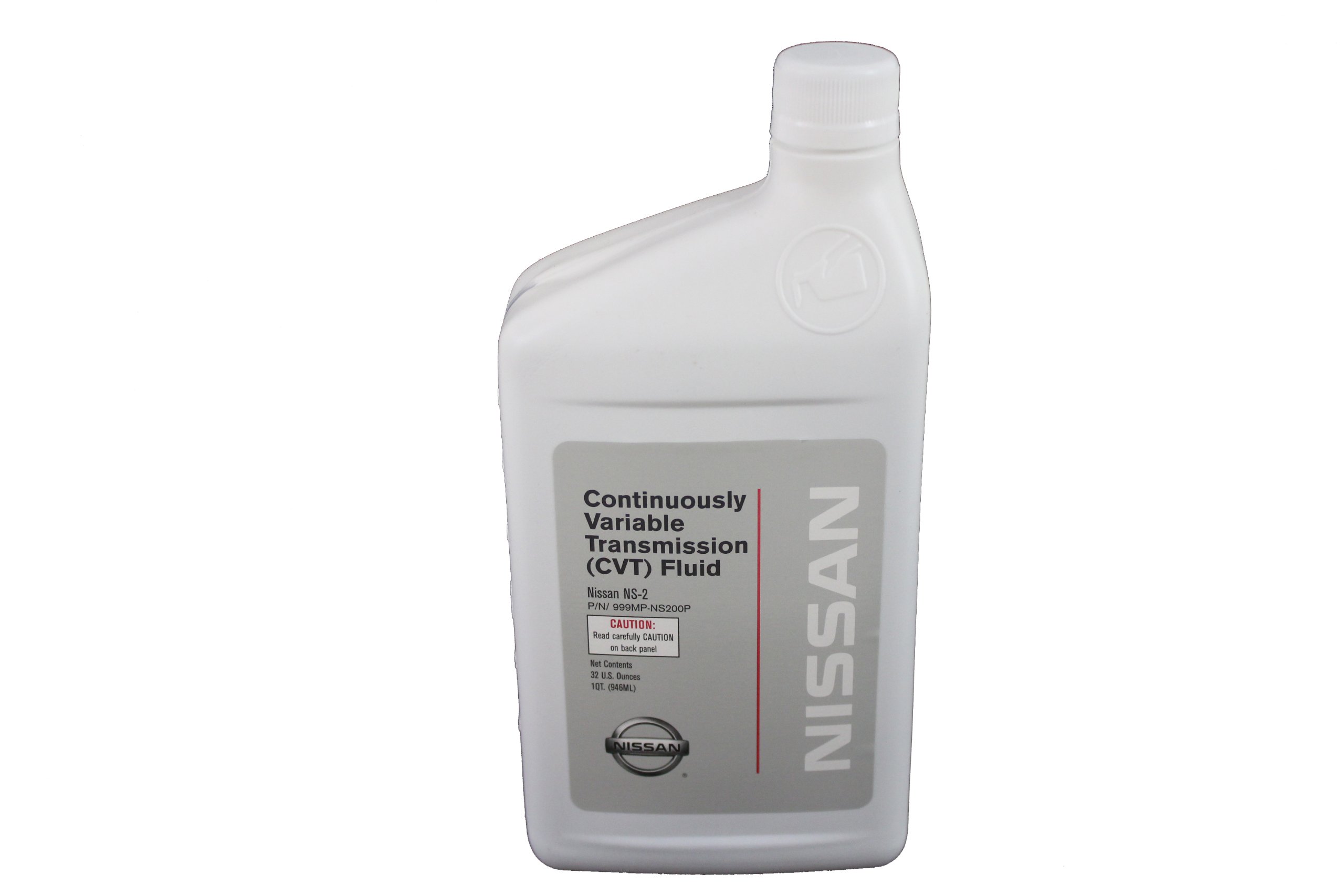
Genuine Nissan Fluid 999MP-CV0NS2 Continuously Variable Transmission Fluid is the standard for older Nissan Altima transmission systems. By maintaining the correct friction balance, it helps prevent the internal slipping that can lead to costly repairs. This fluid is designed to work in harmony with the original metallurgy of your transmission, providing reliable protection for daily driving needs and long-term vehicle operation.
Best for: Owners who want to perform smaller top-offs or maintenance on NS-2 systems.
Key features
- 1-quart size
- official NS-2 specification
- refined for Nissan vehicles
Pros
- Perfect for partial fluid changes
- guaranteed compatibility
- easy to store
Cons
- More expensive per quart compared to bulk packs
Keeping a spare quart in your garage is a smart way to manage minor fluid level adjustments.
Purchase this if you only need a single quart to reach the proper fill level or to perform a minor refresh.
Idemitsu CVT Type N (NS-2) Transmission Fluid – 1 Qt, 6 Pack
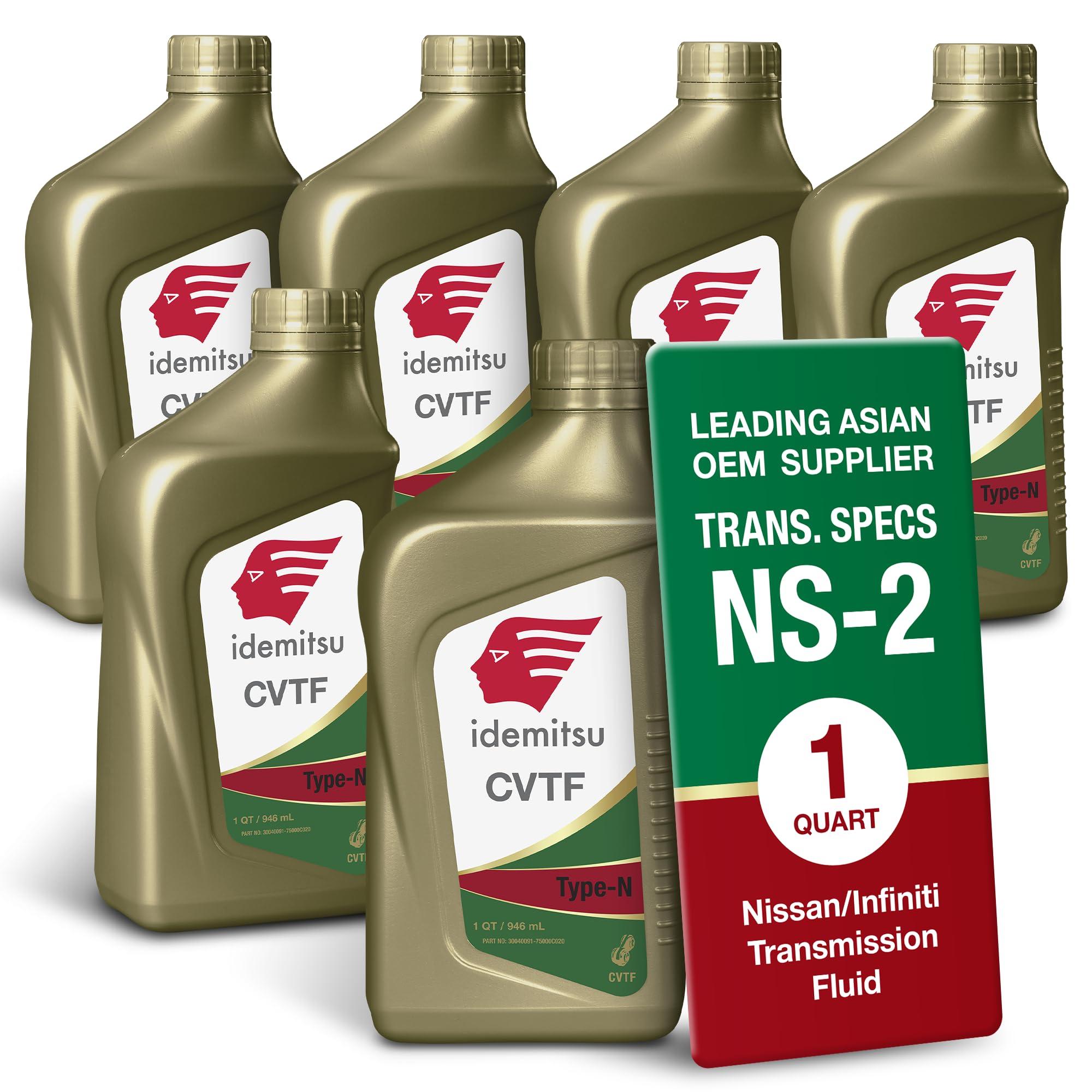
Idemitsu CVT Type N (NS-2) Transmission Fluid is designed to meet the rigorous demands of older transmission systems. By using a sophisticated additive package, it helps maintain smooth operation and prevents the characteristic shuddering that can occur in high-mileage units. This fluid provides the necessary protection for the internal components of your Nissan Altima, ensuring a responsive driving experience for years to come.
Best for: High-mileage owners requiring a reliable NS-2 compliant fluid for their older vehicles.
Key features
- 1-quart 6-pack
- NS-2 compatible
- specialized friction modifiers
Pros
- Smooths out older transmissions
- excellent wear protection
- reliable performance
Cons
- Only compatible with older NS-2 systems
Idemitsu is a leader in fluid technology and this product is a reliable substitute for factory fluids.
Go with this if your high-mileage vehicle requires an NS-2 fluid and you want to ensure the best possible protection for its remaining service life.
Shopping Priorities
Before placing an order, calculate your total fluid requirements by cross-referencing the capacity of your transmission with the volume provided in each container. A simple drain and fill procedure typically requires significantly less fluid than a full system flush. Check the product listing to see if you are purchasing a single quart or a multi-quart pack, and ensure the total volume exceeds your needs to account for potential spills or the necessity of overfilling to reach the proper level during the final check.
Always inspect the product packaging for the clearly printed fluid specification, such as NS-2 or NS-3, to ensure the product matches your vehicle’s engineering requirements. This information is typically found on the front or back label of the container. Do not rely solely on the product title; verify the physical bottle matches the specific grade your vehicle demands, as purchasing the wrong grade will result in an unusable product that could damage your transmission if installed.
Verify the authenticity of the seller to avoid counterfeit lubricants, which often lack the specialized friction modifiers and thermal additives required for CVT systems. Only purchase from reputable automotive suppliers or direct manufacturer storefronts to ensure the integrity of the chemical formulation. Additionally, check for production date codes on the container, as transmission fluids have a finite shelf life. Using expired or degraded fluid can compromise the performance of your vehicle, so always choose fresh, verified stock from a trusted source to guarantee you are receiving the high-quality protection your transmission requires.
Maintenance Tips
Monitoring your fluid color and smell is a simple way to track transmission health. Healthy fluid is typically clear or light green/blue, whereas burnt or degraded fluid will appear dark brown or black and may have a sharp, acrid odor. Check your fluid regularly using a clean dipstick to ensure it remains in good condition.
Adhere strictly to the manufacturer-recommended service interval, especially if you drive in severe conditions. Stop-and-go city traffic, mountainous terrain, or frequent short trips place extra stress on your transmission fluid, causing it to break down faster than it would under ideal highway conditions. When in doubt, perform your fluid changes slightly ahead of schedule.
Keep the area around the transmission filler neck clean before you remove the cap. Even a small amount of dirt or debris entering the system can cause significant damage to the sensitive valves and pulleys inside. Use a clean rag to wipe away any grime before opening the fill port to ensure that only clean fluid enters your transmission.
What to Avoid
Overfilling the transmission is a frequent mistake that leads to foaming and erratic shifting. Always check the fluid level while the engine is at operating temperature and the vehicle is on a level surface, unless your manual specifies otherwise. Adding too much fluid creates excess pressure that can blow out seals and damage the transmission housing.
Using a universal fluid that claims to be compatible with every transmission type is a risky shortcut. These fluids often lack the specific friction coefficients required for your vehicle’s unique CVT design. Stick to fluids that explicitly list your required specification on the bottle, as this is the only way to ensure compatibility and performance.
Ignoring the importance of a clean drain pan and filter is another common error. If your transmission uses a replaceable filter or has a pan that requires cleaning, skip neither step. Reusing old filters or failing to clean the pan means you are circulating old contaminants into your fresh fluid, which significantly reduces the effectiveness of your maintenance.
What Buyers Want to Know
Can I mix different brands of transmission fluid?
It is strongly recommended to stick to one brand and specification. Mixing fluids can alter the friction characteristics, potentially leading to shuddering or premature wear.
How often should I change my transmission fluid?
Most manufacturers recommend a change every 30,000 to 60,000 miles, but you should check your specific owner’s manual for the exact interval for your model year.
What happens if I use the wrong transmission fluid?
Using the wrong fluid can cause belt slippage, overheating, and eventual catastrophic failure of the transmission, which is often very expensive to repair.
Do I need to flush the system or just drain and fill?
A drain and fill is usually sufficient for regular maintenance, but a full flush may be required if the fluid has been neglected for a long period.
How can I tell if my transmission is overheating?
Symptoms include a burning smell, delayed shifting, or a warning light on your dashboard. If you notice these, stop driving and have your vehicle inspected.
Is it safe to use aftermarket fluids?
Yes, as long as the fluid explicitly states it meets the exact NS-2 or NS-3 specification required by your vehicle’s manufacturer.
Closing Recommendation
Securing the right maintenance fluids ensures your Nissan Altima remains reliable for years to come. For those operating newer models, the Nissan Genuine OEM CVT-3 Transmission Fluid 999MP-NS300P stands out as the factory-recommended solution for optimal performance. Conversely, owners of older vehicles requiring the NS-2 standard should utilize the Nissan Genuine OEM CVT-2 Transmission Fluid 999MP-NS200P to maintain the integrity of their older transmission architecture and avoid mechanical complications.
Beyond brand-specific options, the Idemitsu CVT Type N3 serves as a highly reliable alternative for drivers seeking synthetic thermal protection. When making your final selection, verify the specific fluid grade required by your vehicle’s manual rather than relying on general assumptions. Investing in high-quality, manufacturer-approved or verified synthetic fluids is the most effective way to preserve internal transmission components, enhance shift responsiveness, and prevent the costly long-term damage associated with using incompatible lubricants.